1 The human body maintains a balanced internal environment. In order to accomplish this,
(1) organelles work independently
(2) all cells have the same shape and function
(3) insulin is produced when protein levels are low
(4) stimuli are detected, and actions are taken
Solution: We can answer this by eliminating wrong answer choices. The correct answer is: Choice 1 = Organelles work together, not independently. Choice 2= Cells have different shapes and functions. Choice 3= Insulin responds to high blood sugar, not low protein. Choice 4= stimuli are detected, and actions are taken. This describes how the body maintains balance through homeostasis. Choice 4 is the correct answer
2 Wolves are important predators in some ecosystems. If wolves are removed from their environment, the ecosystem is in danger of becoming unstable due to
(1) a reduction of autotrophs when the number of herbivores is not being kept in check by the wolves
(2) a decrease in the number of herbivores because they will not be able to reach carrying capacity
(3) an increase in the biodiversity of the remaining animal and plant species
(4) some species of herbivores taking over the niche the wolves occupied
Solution: Choice 1 is the correct answer choice. Wolves help control herbivore populations. Without them, herbivores may overgraze plants (autotrophs), leading to ecosystem imbalance.
3 Which statement best explains how deforestation that is the result of forest fires can contribute to global warming?
(1) Burning the trees adds smoke to the atmosphere and blocks sunlight.
(2) Burning the trees adds carbon dioxide to the atmosphere.
(3) Deforestation removes trees that produce carbon dioxide through the process of photosynthesis.
(4) Deforestation immediately increases ecosystem stability needed in the burned area.
Solution: When trees burn, they release stored carbon as carbon dioxide, a greenhouse gas that contributes to global warming. Choice 2 is the correct answer. The other choices are incorrect because: Deforestation decreases, not increases, ecosystem stability. Smoke may block sunlight temporarily, but it does not cause global warming. Trees absorb carbon dioxide during photosynthesis; they don’t produce it.
4 For centuries, humans have built dams along rivers to redirect water for power, irrigation, and transportation. Dams can prevent migrating fish from swimming upstream to reproduce and can also disrupt the flow of sediments and nutrients. Communities are starting to eliminate some dams, and the health of the river ecosystems is being restored. This best illustrates that
(1) technological advances often involve environmental trade-offs
(2) when humans modify their environment it always has effects that cannot be reversed
(3) industrialization has had a positive effect on the health of river ecosystems
(4) the construction of dams affected abiotic factors in the river but not biotic factors
Solution: Building dams provides benefits like power and irrigation but can harm ecosystems. Removing dams shows efforts to reverse those impacts, highlighting the trade-offs between human needs and environmental health. The correct answer is 1.
The other choices are incorrect because: Both biotic (fish, plants) and abiotic (sediment flow) factors are affected by dams. Some environmental effects can be reversed, as shown in the passage. The passage describes harm, not benefits, to river ecosystems from industrialization.
5 In humans, lactose is broken down into glucose and galactose in the presence of a particular enzyme. It is most likely that the enzyme that
breaks down lactose
(1) breaks down several other types of food in the stomach
(2) is involved in other reactions when the temperature and pH are ideal
(3) helps in the synthesis of complex sugars during autotrophic nutrition
(4) is not involved in other types of reactions because enzymes are specific
Solution: Enzymes are highly specific and usually work on only one type of substrate. The enzyme that breaks down lactose is lactase, and it specifically breaks down lactose only. The correct answer is 4. The other choices are incorrect because: Humans are not autotrophs and do not synthesize sugars through autotrophic nutrition. Enzymes are not typically responsible for breaking down many different substances. Temperature and pH affect enzyme activity but don’t change their specificity.
6 The Tdap vaccine can protect adolescents and adults from the serious bacterial diseases tetanus, diphtheria, and pertussis. Another vaccine, called
Td, protects against tetanus and diphtheria, but not pertussis. Td does not protect against pertussis because the
(1) Tdap vaccine is given to treat pertussis
(2) Td vaccine does not contain the antibodies from pertussis to fight the bacteria
(3) Tdap vaccine contains a small amount of the bacteria that causes pertussis
(4) Td vaccine does not stimulate the immune system of people to recognize pertussis antigens
Solution: Vaccines work by exposing the immune system to antigens from specific pathogens. Since the Td vaccine does not include pertussis antigens, it does not trigger an immune response against pertussis. The correct answer is 4: The other choices are incorrect because: The Tdap vaccine contains inactivated parts of the pertussis bacteria, not live bacteria. Vaccines are used to prevent, not treat, disease. Vaccines contain antigens, not antibodies.
7 Pelagic red crabs living on the ocean floor have been found to eat small bits of plastic. When they are consumed, these small creatures are passing
the plastics along the food chain to predators, including fish consumed by humans.
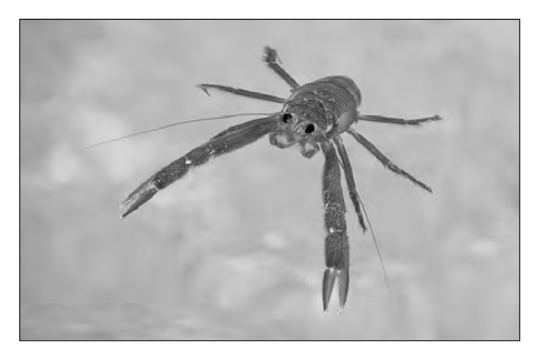
This is of concern because it
(1) decreases plastic recycling by primary consumers
(2) increases the risk of harmful substances in our food supply
(3) decreases the producers in the ecosystem
(4) increases the biodiversity of the ocean
Solution: When small ocean animals like pelagic red crabs eat plastic, those plastics can move up the food chain, potentially reaching humans and harming health. The correct answer is 2: The other choices are incorrect because: Plastic pollution harms biodiversity; it doesn’t increase it. Animals do not recycle plastic. Plastic consumption by animals doesn’t directly reduce producers like algae or plants.
8 Duckweed is a small plant that grows on the surface of still bodies of water. Over a nine-week period, scientists monitored the growth of duckweed in three ditches located on the same farm. The number of duckweed plants increased rapidly during weeks one and two. After two weeks, each ditch was completely covered with a layer of duckweed and remained covered for the remaining seven weeks. A valid conclusion based on the data collected over this nine-week study is that
(1) animals that eat duckweed have the greatest effect on duckweed population size
(2) duckweed populations die off after completing a two-week life cycle in the ditch
(3) only changes in temperature affect duckweed population size
(4) the size of the duckweed population is kept stable by limited resources in the ditch
Solution: After rapid growth, the population stabilized because the ditch became fully covered, meaning space, nutrients, or other resources became limited, preventing further growth. The correct answer is 4
9 Which statement explains why the organisms in some ecosystems, such as rainforests, deserts, and oceans, are different from each other?
(1) The living organisms in each ecosystem have different needs and produce the physical conditions that they require.
(2) Each ecosystem contains different types of living organisms that change each of the physical conditions present there.
(3) They all have the same physical conditions present, but the living organisms use them in different ways.
(4) Each ecosystem contains different physical conditions that determine the type of living organisms present there.
Solution: Different ecosystems (like rainforests, deserts, and oceans) have unique conditions such as temperature, moisture, and light, which influence what organisms can live there. The correct answer is 4 The other choices are incorrect because: Physical conditions are not the same across all ecosystems. Physical conditions influence organisms more than organisms create those conditions. Organisms may influence conditions slightly, but they don’t determine the main physical features.
10 Some green plants secrete acids that dissolve rock, which makes it possible for the plants to absorb phosphorus needed for healthy plant
growth. In addition to phosphorus, plants require many other substances. Which substances are required for the production of carbohydrates in
green plants?
(1) oxygen and nitrogen
(2) carbon and glucose
(3) carbon dioxide and water
(4) hydrogen and starch
Solution: Green plants use carbon dioxide and water during photosynthesis to produce carbohydrates. The correct answer is 3
11 Which statement about competition in ecosystems is correct?
(1) Organisms compete most when they occupy different niches and resources are plentiful.
(2) Individuals need not compete, because resources such as water and food are always plentiful in ecosystems.
(3) Organisms that compete successfully will survive, reproduce, and pass their traits on to their offspring.
(4) Competition usually results in the extinction of a species, ensuring the survival of other species
Solution: Successful competition helps organisms survive and reproduce, influencing natural selection. The correct answer is 3. The other choices are incorrect because: Competition rarely causes immediate extinction; it usually affects population sizes over time. Competition is strongest when organisms share the same niche and resources are limited. Resources are not always plentiful; competition often occurs due to scarcity.
12 Human body systems interact with each other. The list below illustrates the results of one body system functioning normally.
•
Muscle cells receive oxygen.
•
Nerve cells receive glucose.
•
Lungs get rid of carbon dioxide.
•
Some gland cells send chemical signals to organs.
Which body system most directly enables all
these functions to occur?
(1) circulatory system
(2) excretory system
(3) digestive system
(4) immune system
Solution: The circulatory system transports oxygen, glucose, carbon dioxide, and chemical signals throughout the body, enabling these functions. The correct answer is 1
13 The Himalayan rabbit lives in the cold Tibetan mountains. It typically has white fur on its body and black fur on its outer extremities, such as the
ears, nose, feet, and tail.
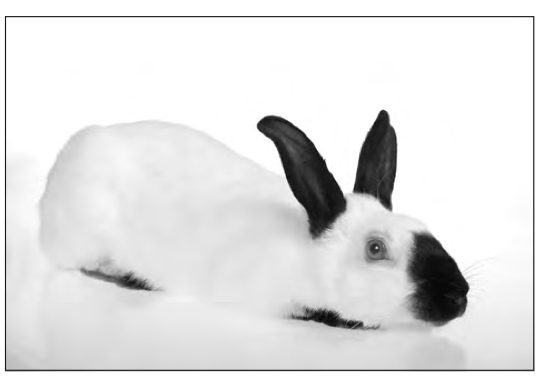
A scientist shaved a patch of white fur off the back of a Himalayan rabbit and applied an ice pack to the area for 30 minutes. The fur in the shaved area grew in black. The best explanation for why black fur grew in the shaved area is that
(1) the food the rabbit ate during the experiment influenced fur color
(2) the fur in the newly shaved area was younger than the white fur on the rest of the body
(3) the ice pack caused a mutation in the genes that regulate fur color
(4) warm and cold temperatures activate different genes for fur color
Solution: Himalayan rabbits have fur color that depends on temperature. Cooler areas grow darker fur, while warmer areas grow lighter fur. The ice pack cooled the shaved area, causing black fur to grow. The correct answer is 4
14 Researchers have identified a mutually beneficial relationship between some plant species and specific fungi. The fungi increase the nutrient
uptake for these plants, and the plants provide nutrition to the fungi.
In order for this relationship to occur, the plant must produce a particular protein. Scientists hope to enable plants that normally do not
interact with these fungi to obtain the benefits that the plant-fungi relationship offers. In order to make this possible, which process
would scientists most likely use?
(1) Treat the plants with chemical fertilizers to stimulate their growth.
(2) Provide the fungi with the same molecular bases that are found in plant protein.
(3) Identify the gene that codes for the protein and introduce it into plant cells by genetic engineering.
(4) Selectively breed a new type of fungus that does not require the nutrients that the plants provide.
Solution: This process would allow plants that don’t normally interact with the fungi to produce the necessary protein and form the beneficial relationship. The correct answer is 3
15 Milkweeds are plants that produce toxic, bitter- tasting chemicals. Some insects have developed the ability to safely feed on milkweed. They
accumulate some of the toxin in their bodies, causing them to taste bitter to other animals that may try to eat them. As a result, most animals
avoid eating these insects. A possible explanation for this relationship is that
(1) eating a toxic plant increases the ability of these insects to survive and reproduce
(2) milkweed populations are controlled by many insects
(3) the milkweed benefits from the insects that can tolerate the toxin they produce
(4) eventually the insects will become immune to the toxin
Solution: By feeding on toxic milkweed and accumulating its toxins, these insects become less likely to be eaten by predators, improving their chances of survival and reproduction. The correct answer is 1
The other choices are incorrect because: The insects tolerate the toxin but becoming immune is not the main point here. The passage doesn’t indicate milkweed populations are controlled by insects. Milkweed does not benefit from insects that tolerate its toxin; often, herbivory harms plants.
16 Which type of cell engulfs pathogens and marks them for killing?
(1) red blood cell (3) nerve cell
(2) white blood cell (4) muscle cell
Solution: White blood cells engulf pathogens and help mark them for destruction to protect the body from infections. The correct answer is 2
Red blood cells-Carry oxygen from the lungs to body tissues and transport carbon dioxide back to the lungs for removal.
Nerve cells (neurons)- Transmit electrical signals throughout the body to enable communication between the brain, spinal cord, and other parts.
Muscle cells -Contract and relax to produce movement in the body.
17 Which choice below best completes the diagram with a correct label and definition for the box labeled X?
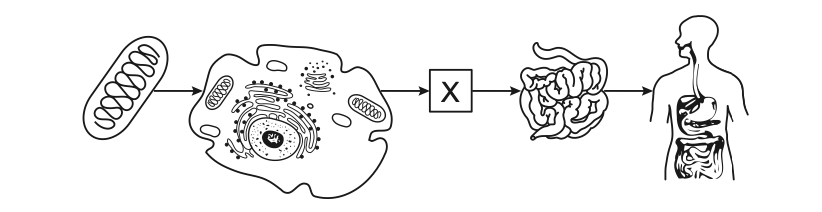
(1) cell: the basic structural, functional, and biological unit
(2) organ: a group of tissues with a common function
(3) tissue: a group of cells with a similar structure and function
(4) organ system: a collection of organs with a common function
Solution: To solve the question, let’s analyze the diagram step by step: The first image is of organelles. The next image is of a cell. Then comes a box labeled X. Following that is an organ (such as the stomach or intestines). Finally, there is a human body showing an organ system (digestive system).We are looking for what comes between a cell and an organ. That would be:X = tissue, which is defined as a group of cells with a similar structure and function. Choice 3 is the correct answer.
18 Concern is rising that mass extinctions of many species may increase. In the graph below, the risk of extinctions is shown to have risen rapidly from 1850 to 2014.
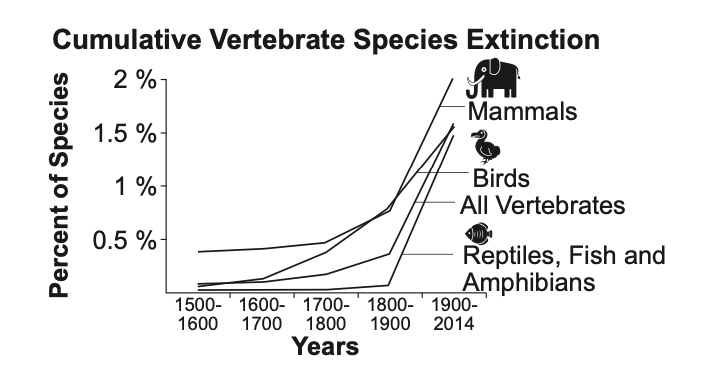
This loss of different species is a concern because it may
(1) lead to an increase in diversity in the ecosystem
(2) impact the energy flow and food supply within an ecosystem
(3) produce increased nonrenewable resources
(4) provide additional sources of potential medicines
Solution: The loss of different species is a concern and something negative. We can eliminate choices 1, 2 and 3 because those are positive. Choice 2 is the correct answer.
19 The American Museum of Natural History has an exhibit called the Ecosystem Sphere. It is a huge glass globe that was assembled in 1999. Populations of algae, bacteria, and little shrimp were sealed with water
and air inside. The Ecosystem Sphere is kept in a well-lit area. Although the sphere has never been opened, groups of each kind of organism are still alive inside it. The most likely reason for this is because the populations have
(1) remained in separate areas of the sphere and do not interact
(2) adapted so that they do not require food
(3) a constant source of energy because they cannot recycle gases and materials
(4) a constant source of energy and recycle gases and materials
Solution: The Ecosystem Sphere is a closed system—no matter or organisms enter or leave, but energy (like sunlight) can still pass through. In such an environment, for life to persist: Energy must be constantly available, usually from light (which powers photosynthesis by algae). Gases and materials must be recycled. For example, algae produce oxygen through photosynthesis, which the shrimp and bacteria use. In turn, these organisms produce carbon dioxide and waste, which the algae use again. This balance of energy flow and nutrient cycling is what allows the organisms to survive over time without needing anything added or removed from the sphere. Choice 4 is the correct answer.
20 Ebola is a deadly viral disease. Victims of Ebola suffer from massive blood loss and organ failure. Researchers are testing a vaccine on people who
have not yet been infected by Ebola, but live in high-risk areas. The vaccine must be given to the subjects before exposure to Ebola because
(1) the vaccine will mutate the virus when a person gets infected
(2) if a subject is infected with Ebola, it will destroy the vaccine
(3) vaccines stimulate the subject’s immune system to react to future exposure to the virus
(4) vaccines are only effective for a few days, so the patient must get the vaccine before exposure
Solution: Vaccines are always given before exposure to the virus in order to teach the immune system how to react to future exposure. Choice 2 is the correct answer.
21 A relatively large number of antibodies in a blood sample would most likely indicate that there is
(1) an infection in the body
(2) a mutation in the lung
(3) a deficiency of carbon dioxide in the circulatory system
(4) an insufficient amount of a specific vitamin in
the diet
Solution: A large number of antibodies usually means the immune system is responding to an infection. The correct answer is 1
22 Ultraviolet light can alter the DNA segments of
genes in the skin cells of an individual. Which statement best describes a direct result of these alterations?
(1) Any cells produced from the altered skin cells will have the same alterations.
(2) All the offspring of the individual will have the same skin cell alterations.
(3) These alterations will spread to all the other cells in the body.
(4) The sex cells of the individual will have the same alterations.
Solution: Because the DNA change is in skin cells (somatic cells), only the daughter cells from those skin cells will carry the alterations. Offspring and other body cells won’t be affected unless the mutation occurs in sex cells. The correct answer is 1
23 The energy required to assemble proteins and fats is directly supplied to body cells from
(1) all the colors of visible light
(2) molecules of ATP contained within the cells
(3) all the DNA found in sex cells
(4) molecules of carbon dioxide produced by chloroplasts
Solution: ATP is the primary energy-carrying molecule in cells. It provides the energy needed for many cellular processes, including the assembly of proteins and fats. Choice 2 is the correct answer.
24 There are over 200 different cell types in the human body. Each type of cell is specialized to carry out a particular function, but they all
developed from the same single cell. This is because each type of cell
(1) contains different genes than the other types of cells
(2) destroys the genes found in the other types of cells
(3) expresses some genes not expressed in the other cell types
(4) lacks the genes found in the other cell types
Solution: All cells in the human body (except some like red blood cells) contain the same DNA. What makes different cell types specialized is gene expression — different cells turn on (express) different sets of genes depending on their function. For example, a muscle cell expresses genes that produce muscle proteins, while a nerve cell expresses genes that help it transmit signals. They do not destroy or lack the genes found in other cells; they just use different parts of the same genetic code. The correct answer is 3.
25 Coral reefs are vital components of marine ecosystems. They provide shelter and nutrition to many organisms that live on or in them. Some
coral reefs in the Pacific Ocean are heavily polluted with plastic objects that provide surfaces where disease-causing microbes are able to grow.
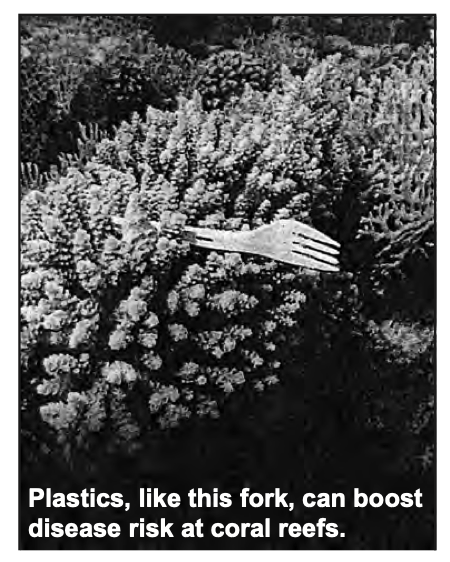
If the amount of plastic present on coral reefs continues to increase, it is likely that the
(1) coral will adapt to the presence of the plastic and thrive
(2) microbes will adapt to living directly on the coral
(3) algae that live on the reef will begin to decompose the dying coral
(4) species dependent on the coral will be negatively impacted
Solution: Increasing plastic pollution harms coral reefs, which disrupts the habitat and food sources for many species that depend on them. The correct answer is 4
26 Enzymes, antibodies, and receptor molecules all
have different functions. However, they are alike in that they
(1) all are involved in cellular respiration
(2) have a shape that is specific to their function
(3) are classified as carbohydrates
(4) are important in animals but not plants
Solution: Enzymes, antibodies, and receptor molecules all have specific shapes that allow them to perform their unique functions effectively. The correct answer is 2
27 Australian quolls are endangered mammals. One factor causing the death of many quolls is that they occasionally consume cane toads, which
are poisonous. Scientists have identified a gene that some quolls possess that makes them avoid eating cane toads. By selectively breeding quolls
with the “toad-avoiding gene” with other quolls who lack the gene, scientists found that all of the hybrid offspring inherited the survival gene.

Before the survival gene could be passed on to any offspring, the genetic material present in the parent with the “toad-avoiding gene” would have
to be
(1) mutated to become a different gene
(2) accurately replicated
(3) genetically engineered
(4) changed through recombination
Solution: For a gene to be passed to offspring, the genetic material must be accurately copied during cell division so the gene remains unchanged. The correct answer is 2
28 Scientists have cloned many animals, such as cows, sheep, and chickens, from a single cell. Which natural process is most similar to these cloning techniques?
(1) asexual reproduction
(2) genetic recombination
(3) chromosome mutations
(4) gamete production
Solution: Cloning from a single cell is similar to asexual reproduction, where offspring are genetically identical to the parent because they come from one cell without combining genetic material from two parents. The correct answer is 1.
29 Within a sexually reproducing species, the correct chromosome number is maintained by
(1) halving the chromosome number in gamete production, followed by fertilization
(2) doubling the chromosome number in gamete production, followed by fertilization
(3) halving the chromosome number during mitosis, followed by differentiation
(4) doubling the chromosome number during mitosis, followed by differentiation
Solution: Meiosis halves the chromosome number in gametes, and fertilization restores the full chromosome number in the offspring. The correct answer is 1
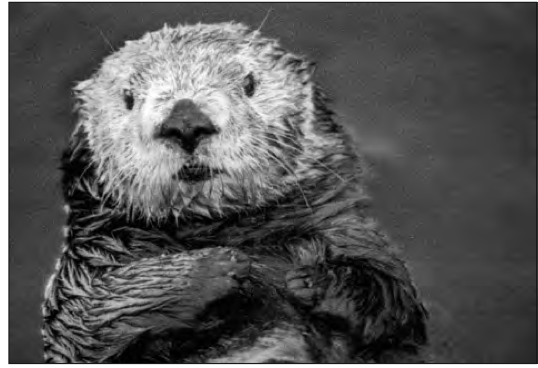
30 The ability of sea otters to find food can be reduced because the environment where they search for food is often dark and murky. It has
been recently discovered that the surface of otters’ paws are able to quickly detect a difference of one-quarter of a millimeter when comparing
the size of objects, including food sources.
The special characteristics of the otters’ paws can be described as
(1) a variation that eliminates the need for other senses otters normally possess
(2) a variation that is unlikely to be passed on to offspring because it is not a genetic trait
(3) an adaptation that could provide an advantage over the other organisms that they compete with for food
(4) an adaptation that is most likely the result of a mutation in body cells of the ancestors of the otter
Solution: Special characteristics that improve an organism’s ability to survive and compete for resources are adaptations that give it an advantage. The correct answer is 3
Part B–1
31 Catalase is an enzyme produced by organisms that breaks down hydrogen peroxide, releasing oxygen and water. The relative enzyme activity, when tested at different temperatures, is shown in the graph below.
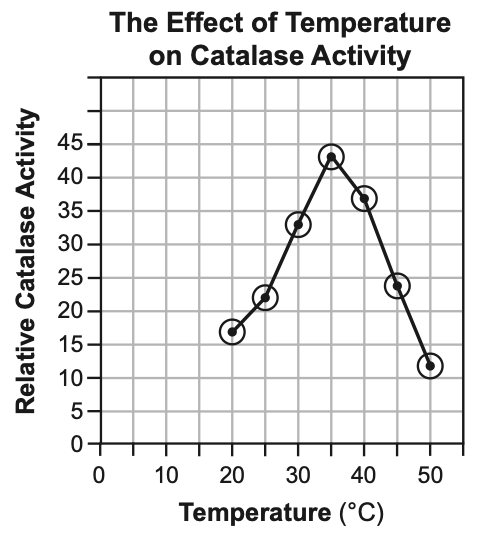
Which statement below best explains the decrease in activity of catalase after 35ºC shown in the graph?
(1) The structure of the enzyme changes, which slows down the reaction.
(2) There is no hydrogen peroxide left for the activity to continue, so it stops.
(3) The raw materials permanently bind to the catalase, preventing the reaction.
(4) The reaction is no longer needed for survival of the individual.
Solution: Enzymes like catalase have a specific 3D shape that allows them to function. When the temperature goes beyond an optimal level (in this case, around 35ºC), the enzyme starts to denature—its structure changes. This alters the shape of its active site, reducing its ability to bind to hydrogen peroxide and slowing or stopping the reaction. The correct answer is 1
32 Using a microscope, a student observed four different types of cells. For each structure he observed, he placed an X in the chart below to indicate the cells where the structure was observed.
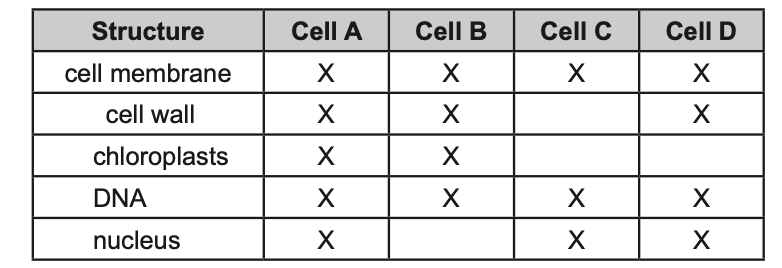
Which of the cells he viewed were most likely from heterotrophs?
(1) A and C (3) C and B
(2) B and D (4) D and C
Solution: To determine which cells are most likely from heterotrophs, we need to find the ones that do not have chloroplasts, because chloroplasts are used for photosynthesis, a process autotrophs (like plants and algae) use to make their own food.
Looking at the chart:
- Cell A has chloroplasts → autotroph
- Cell B has chloroplasts → autotroph
- Cell C does not have chloroplasts → possible heterotroph
- Cell D does not have chloroplasts → possible heterotroph
The correct answer is 4.
Part B–1
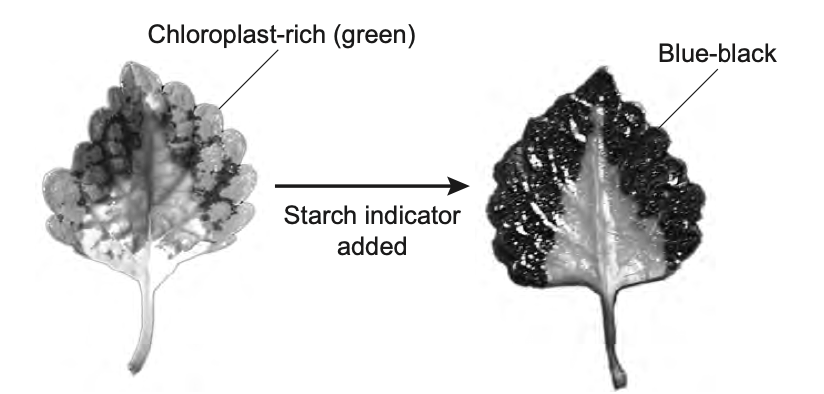
33 Coleus is a type of plant that has many variations in its leaves. Many coleus plants have chloroplast-rich areas on the edge of the leaf. Other areas in the middle lack chloroplasts. A student exposed the coleus leaf
to sunlight. Later, starch indicator was added to the entire leaf. The diagram below shows the result of the experiment
Which statement is a valid claim, supported by evidence from this experiment?
(1) Chloroplasts are necessary for the production of starch indicator.
(2) Starch indicator causes leaves to produce oxygen.
(3) Chloroplasts are necessary for the production of starch.
(4) Water is necessary for the production of starch.
Solution: The parts of the coleus leaf that had chloroplasts (the green, outer edges) tested positive for starch after exposure to sunlight. The parts without chloroplasts (usually in the center, which might be white or another color) did not show starch presence. This indicates that starch is only produced where chloroplasts are present, showing that chloroplasts are necessary for photosynthesis, which produces glucose, later stored as starch. The correct answer is 3
34 Breathing vapors produced by e-cigarettes has caused respiratory problems, including coughing, shortness of breath, difficulty breathing, and even some deaths. Medical experts are warning the public and discouraging
the use of these devices.
The medical issues associated with vaping are an example of
(1) organ malfunctions caused by personal behaviors
(2) feedback response maintaining homeostasis
(3) inherited disorders resulting from inhaling vapors
(4) the effects of infectious parasites carried by the vapors
Solution: The correct answer is 1. Vaping is a personal behavior (a choice made by an individual). The health issues like coughing, shortness of breath, and even death are organ malfunctions, particularly of the respiratory system. These problems are not inherited, not caused by parasites, and do not represent a feedback mechanism to maintain homeostasis.
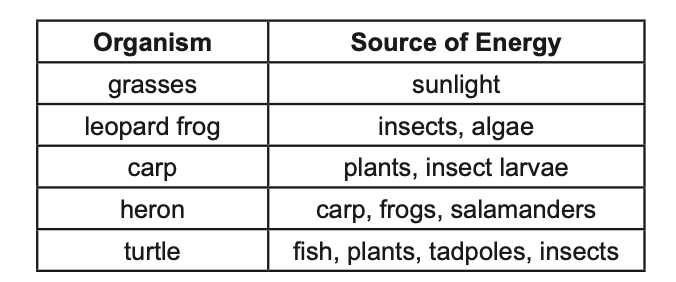
35 The chart below lists some organisms found in a New York ecosystem and their sources of energy.
When constructing an energy pyramid of this ecosystem, which of these organisms would be placed at the top of the pyramid?
(1) grasses (3) heron
(2) carp (4) leopard frog
Solution: An energy pyramid represents the flow of energy through a food chain, with producers at the base and top predators at the top. Heron eats carp, frogs and salamanders and should be on top. Choice 3 is the correct answer.
Base your answer to question 36 on the information and graph below and on your knowledge of biology.
An unusually cool and wet spring prevented certain farmers from planting corn at the usual time. They normally planted their crop on May 1, but the altered weather patterns delayed planting until June 1.
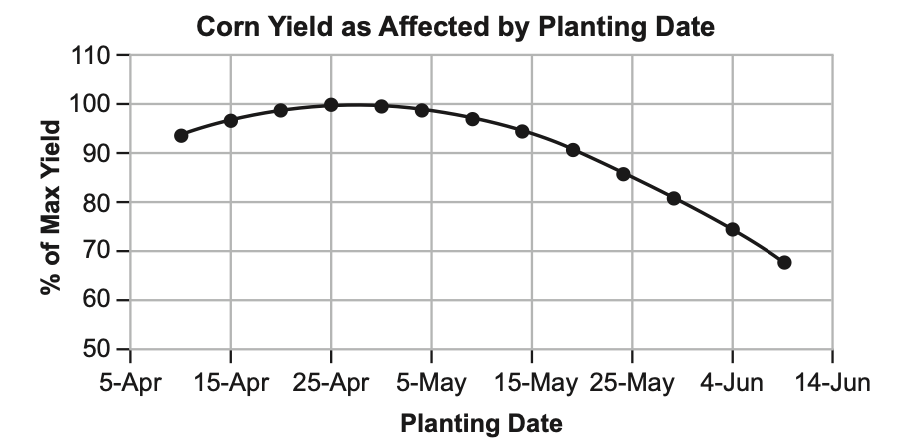
36 Based on the information given, what is the most likely impact of the delayed planting on the production of corn?
(1) Corn yield will remain at 100% because higher temperatures in June will make plants grow faster.
(2) The corn yield may be reduced by about 20% because of the delay in planting.
(3) Corn yield may be reduced by about 80% because of the delayed planting.
(4) Crops planted on June 1 will have the same yield as those planted on April 1.
Solution: The farmers delayed planting corn from May 1 until June1 . Looking at the chart on around May 5 , we are at a 100% yield and June 4th at 75%. Choice 2 is the correct answer.
37 An ecologist is studying the biodiversity of beetle species in four different habitats. She counted the number of individuals of each species she observed in each habitat. The results are shown in the data table below.
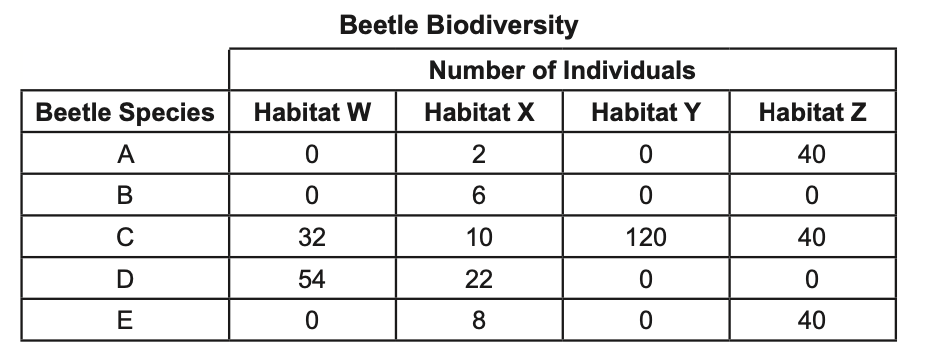
Which of these habitats displays the most biodiversity of beetle species?
(1) Habitat W (3) Habitat Y
(2) Habitat X (4) Habitat Z
Solution: Let’s look at each habitat to see how many different beetle species it contains. Habitat W contains C and D only. Habitat X contains all of the species listed. Habitat Y contains only C and habitat Z contain A,D, E. Choice 2 is the correct answer.
38 Hummingbirds, with their long beaks and tongues, are attracted to long, tubular flowers with a lot of nectar. When a hummingbird consumes the nectar from a flower, pollen sticks to the hummingbird and is transferred when the hummingbird feeds from other flowers
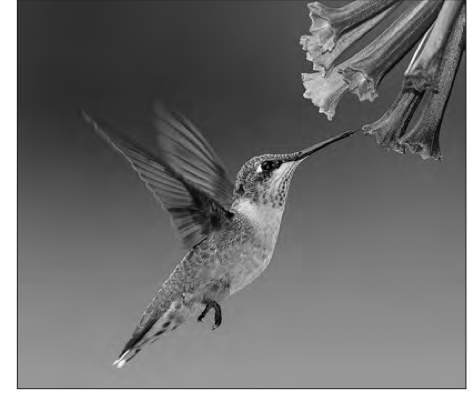
This relationship between the flowers and hummingbirds is a result of
(1) changes in hummingbirds and flowers in response to their needs
(2) inheritance of characteristics acquired during their lifetime
(3) natural selection of beneficial variations
(4) the environment modifying gene expression
Solution: The relationship between hummingbirds and flowers is an example of coevolution, where both species have developed traits that benefit each other over time. Hummingbirds with longer beaks could access more nectar, and flowers that attracted hummingbirds had better chances of being pollinated. These beneficial traits were passed on through natural selection, not through needs or acquired characteristics. The correct answer is 3
39 The kittens in the photograph below were all born in the same litter.
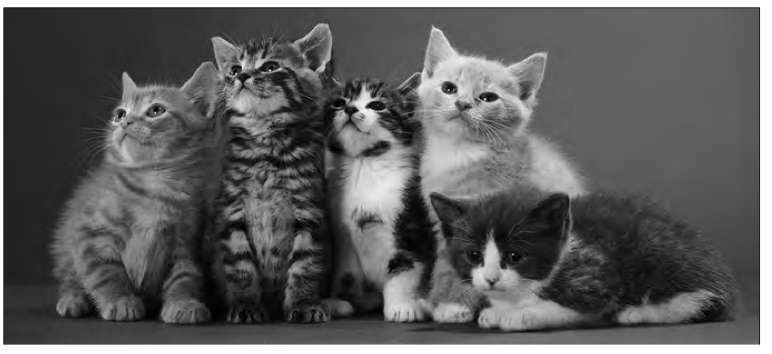
One possible reason that they all have different fur colors and patterns is that
(1) different kittens inherited more chromosomes from one parent than the other
(2) there was a random resorting of genes during gamete formation in each parent
(3) because there were so many, they did not receive the same amount of nutrients from the mother
(4) there were pH differences depending on where in the uterus each kitten developed
Solution: During the formation of eggs and sperm (gametes), chromosomes undergo a process called independent assortment and crossing over, which randomly reshuffles genes. This results in offspring inheriting different combinations of genes, leading to variations in traits like fur color and patterns. This genetic variation explains why kittens from the same litter can look different. The correct answer is 2.

A study was done to determine the effect of a temperature increase on an ocean ecosystem. Panels equipped with heating
elements were placed on the ocean floor 50 feet below the surface
in the Antarctic Ocean. Some of the panels were heated so that
they were 1ºC warmer than the water surrounding them. Others
were heated to be 2ºC warmer, and some were not heated. Over a period of nine months, the researchers returned to the site and documented the changes in marine life they observed.
They noted that 1ºC of warming resulted in a substantial
change in marine life. One species of invertebrate grew rapidly and
became the dominant species. It replaced multiple other species
typically present in the area. The results were less consistent on
the panels that were 2ºC warmer than the water surrounding them.
The photographs on the right show the results observed on the
three sets of panels.
40 Based on this experiment, one result of the future warming of the Antarctic Ocean could be
(1) an increase in the stability of the Antarctic ecosystem
(2) the disruption of existing Antarctic marine food webs
(3) marine organisms evolving more rapidly in order to compete for resources
(4) the need to import predators to eat the tiny invertebrates
Solution: The experiment showed that even a small increase in temperature (1ºC) caused one species of invertebrate to grow rapidly and replace multiple other species. This kind of shift in species dominance can disrupt existing food webs because the balance between predators, prey, and competitors changes. Such disruptions can affect the whole ecosystem’s stability and function. The correct answer is 2.
41 A possible explanation for the differences observed on the panels is that
(1) the growth of organisms is dependent on the abiotic factors present in the environment
(2) on the warmer panels, organisms reached carrying capacity more rapidly and completely died out
(3) on the control panels, wastes built up, poisoning some of the organisms growing there
(4) on the warmer panels, there were fewer decomposers present to recycle available energy
Solution:
Abiotic factors include non-living environmental conditions like temperature. The experiment showed that even small changes in temperature affected which species thrived or declined. This means that organism growth is influenced by abiotic factors such as temperature, which can change the community composition. The correct answer is 1.
42 These test panels provided scientists with information about
(1) how ecological niches influence the rate of mutation
(2) the effect of environmental change on the biodiversity of the Antarctic Ocean
(3) the variety of producer/consumer relationships in the Antarctic Ocean
(4) how the stability of an ecosystem is affected by competition and disease
Solution: The experiment tested how small temperature increases (an environmental change) affected the types and abundance of marine species living on the panels. This directly relates to how environmental change impacts biodiversity—the variety and abundance of species—in the Antarctic Ocean. The correct answer is 2.
43 The kakapo is a small, flightless parrot. Currently there is a small population of kakapos living on four islands off the coast of New Zealand. Scientists are concerned that the kakapo may become extinct due to the introduction of predators and recent infections that have drastically reduced the already small population. During their conservation attempts, scientists made an interesting observation: When food is plentiful, more male offspring survive. Scientists provided the illustration below to explain this observation.

If scientists were going to test this hypothesis, the best way would be to select a test group and develop a research plan that includes collecting data when
(1) all of the kakapos are fed a reduced amount of food
(2) all of the kakapos are fed an unlimited amount of food
(3) the kakapo test group is divided in half, and one-half is fed unlimited food and the other a reduced amount of food
(4) the entire test group of kakapos is fed one type of food for one month and a different type of food for the second month
Solution: To test the hypothesis about how food availability affects the survival of male offspring, you need a controlled experiment with at least two groups: one with plentiful food and one with limited food. This allows comparison to see if more males survive when food is abundant versus when it is scarce. The correct answer is 3.
 RegentsPrepHub